

Image and Grace vs. Evil
This post is also available as a podcast on Apple or Spotify.
Occasionally in conversation with friends about current issues I’ll be asked, “Would you tell a practicing homosexual to repent?” The assumption behind the question is that if I really were a friend of sinners, or if I truly loved my neighbor, I would speak bluntly, risk the relationship, and show tough, albeit uncomfortable, love to those judged to be in sin. The question is a litmus test of my moral orthodoxy.
Since Greatheart’s Table is read by those with differing views, for some of you this seems a non-sensical situation. You simply need to modify the question to fit your context. Would you tell a <insert sin du jour> to repent?
Would I? No. Not in the way such a question is often meant. And before in shocked disbelief you shut me down and cast me out as having abandoned my calling, hear me out.
Such a question cannot be answered in the abstract. Nor can it be answered without first considering how we look at others. When we look at those different from us, we should not look at them primarily through the lens of our systems, our rules, or our prescribed practices. Doing so only leads us to too quickly put others in a box. That’s fine if the other is an immediate threat to us in any way. But when this is not the case, it is too easy to see others through the lenses of our biases and prejudices. The humor of the movie Tucker and Dale vs. Evil (which while being hilariously funny is also uncommonly gory) arises out of the judgments viewers make about the main characters. We immediately judge these two guys as predatory hillbillies. In reality they are caring and gentle souls who like to fish, make pancakes, and play Scrabble.
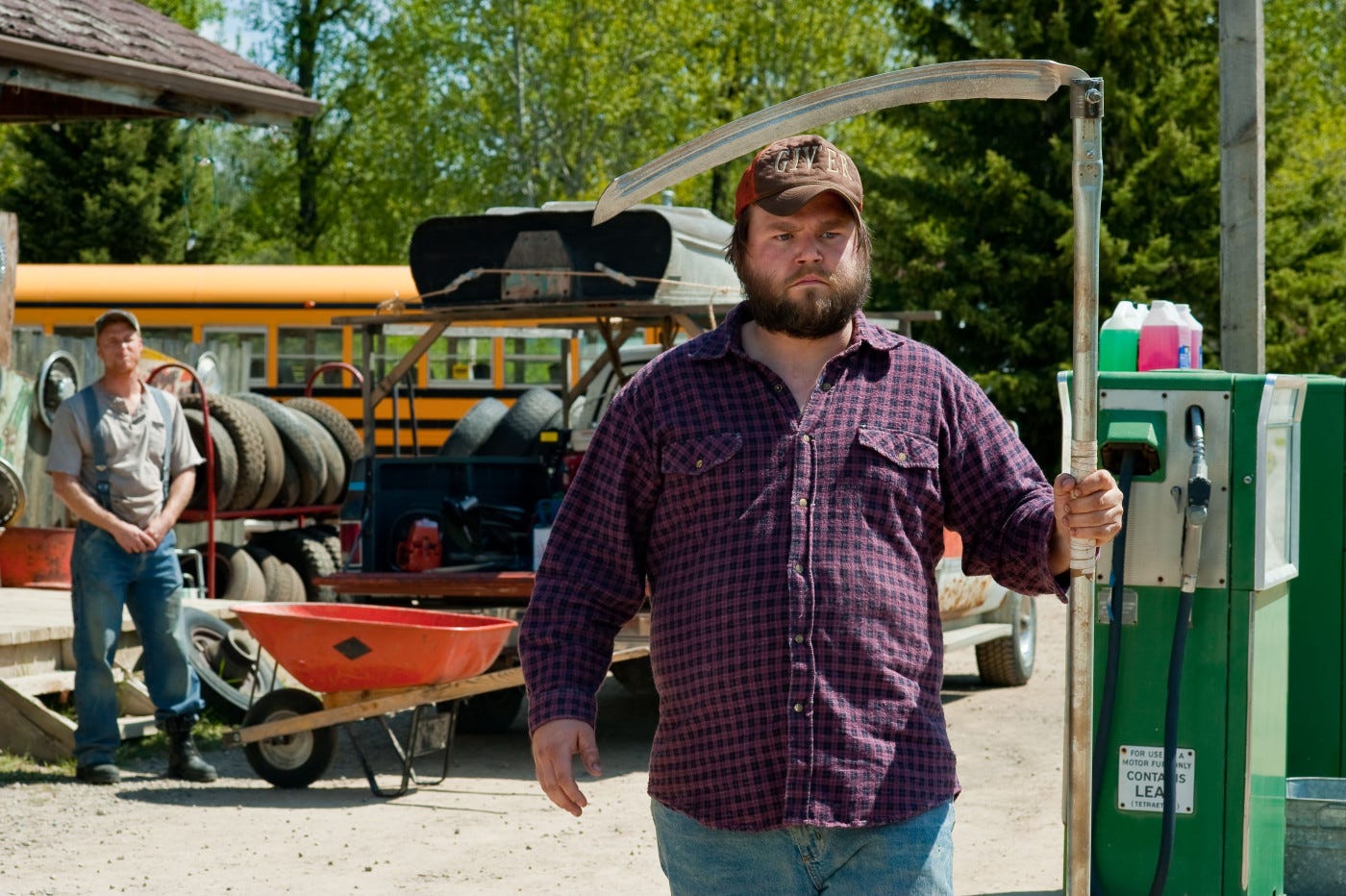
The making of such judgments is human. To move beyond them is divine. Before any calls to repentance leave our lips, we need to re-center our view of the other person in three critical ways.
First
1) I need to see all others as persons created in God’s image.
Whenever I encounter another, I must remember that this person is, like all of us, created in the image of God. He is God’s creation before he is anything else. Before he is white, black, Christian, muslim, dirty, clean, homosexual, straight, living in a mansion, or living in a car, he is a human worthy of being treated with decency and care. When I can first see another as one created in God’s image, I can then begin to think differently about them. I can begin to think beyond my prejudices and preconceptions. I can remember that these are special creations of God, who have been shaped in certain ways by their biology and their environment. They have sinned, yes, and they have been sinned against. They nevertheless stand before me as those sharing a humanity given by God. The person before me is precious to God, albeit broken and scarred, and perhaps even deep in rebellion against his creator.
Jesus wept for such people.
Clearly this is how we’d like others to look at us. And yet if we are not careful, we will assume a position of superiority.
To counter this,,
2) I need to see others as no more in need of God’s grace than I.
Self-righteousness, that slithery, persuasive, self-validating lie, needs to be cut off at the pass. This person, in front of me, no matter what I think of her, needs no more of Christ for her salvation than I do. My sin, no matter how lightly I treat it, requires just as much of the suffering of Christ for my redemption as the supposedly more heinous sin of the other. The infinite disproportion between sin and God’s holy person requires the blood of Christ equally for “small” sins and “large.” We blithely speak such things from theologically well-trained minds without actually letting them inform our interactions with others. No matter how righteous I may feel, I need the cross, the death of the beloved son of God, as much as anyone else. I am no more worthy of the gift of salvation than another, and that gift was as costly to Christ for me as for any other person.
We share with all others a common humanity as well as a shared sinfulness. When I meet others, I need to remember that just as I am no different in my humanity, neither am I different in my lostness apart from grace. I am not permitted to see others as the chief of sinners, whether the sin du jour in our circles is homosexuality or greed or voting Republican. I and others are all persons profoundly in need of God’s grace. If I know that grace, I will want others to know it as well, but I do not and cannot offer that grace to them from on high. I can only do so as two people sharing conversation around the same table. To assume any such unfounded position of moral superiority sinfully poisons any attempt I might make toward what I might consider another’s improvement.
To adjust our thinking in these two ways will shape the desires we have for the other, even for their repentance. The shape that concern will take will be informed by the third consideration. That will be our subject next time.
All of this is my own. I have not used, and will not use, AI for any creative work.
Such needed commentary.
I think 99% of the time it’s the Holy Spirit who “convicts of sin, righteousness and judgment.” Me? Jesus said the second greatest commandment is to “love one another.” So I’ll feebly try that … and let the Holy Spirit do His part.
As always, Randy, you hit the bullseye. I unconditionally agree with your analysis. Perhaps you can carry this commentary one step further by answering the following questions: "At what point in a relationship do you call another person to repentance over their sin (sin of ANY kind)? And what words do you use in a gentle, respectful, and winsome way as a Christian?"